The Cultural Center of the Philippines welcomes Atty. Jose Tomas Syquia to its Board of Trustees. He took his oath of office on January 28, 2025.
Syquia has worked in the private sector for 17 years, specializing in corporate governance and securities law, government procurement, telecommunications, arbitration and mediation, and consultancy work. His decades-long career in public service started as a state counsel at the Department of Justice in 1998. He later joined the Securities and Exchange Commission as a director in 2001 and as an executive director of the Procurement Service in 2014.
The newly appointed Trustee has been a member of the Philippine Bar since 1995. He holds a Master of Law degree from the University of Nottingham in the United Kingdom, focusing on human rights law, humanitarian law, and law of international organizations.
Trustee Syquia is the son of the late Ambassador Enrique Syquia, a renowned international lawyer, diplomat, and law professor who founded Syquia Law Offices. It was once considered the biggest single proprietorship law firm in the country with one of the most extensive private law libraries. He strives to live through his father’s examples.
Syquia will join Chairman Jaime C. Laya; co-chairs Maria Margarita Moran-Floirendo and Carissa Coscolluella; President Kaye Tinga; with Trustees Marivic del Pilar, Junie del Mundo, Isidro Consunji, Jonathan Velasco, Felix “Monino” Duque, and Atty. Gizela Gonzalez in helping the CCP fulfill its mission to be the leading institution for arts and culture in the Philippines.
For Kian Aze Cordero, a student from Timoteo Paez Integrated School, art has become a helpful tool in coping with academic stress and emotional challenges. His experience at Imagine Tondo, a cultural exchange collaboration between the Cultural Center of the Philippines (CCP) and the Korea Arts and Culture Education Service (KACES) has solidified this belief. “Art just calms me down,” said Cordero.
Highlighting the intangible benefits of creative expression, Filipino artist-teachers and invited Korean experts in various fields of arts engaged in special curriculum training, integrating art into the Science, Technology, Engineering, and Mathematics (STEM) framework of the Department of Education (DepEd). This curriculum was implemented in Imagine Tondo, a two-week workshop held from September 23 to October 4, 2024.
To give the world of art the spotlight it rightfully deserves in the academe, Imagine Tondo kicked off with training for the participating educators, giving them ample time to formulate art-centered activities tailored to children
The project aimed to foster and strengthen community bonds among the young people in Tondo. Offering them a safe space to express themselves, Imagine Tondo also provided the opportunity to connect with others through creativity.
“Imagine Tondo describes the happiness that art and culture can bring. For the past two years, CCP and KACES have been partners in emphasizing the essence of art in life and culture, sharing the invaluable experience of artmaking with younger generations,” shared KACES President Eun-Sil Park.
Through Imagine Tondo, both Filipino and Korean mediators and participants engaged in cultural exchanges, with each sharing what they learned from each other and from the students they encountered.
CCP Vice President and Artistic Director Dennis M. Marasigan expressed his appreciation for the partnership with KACES and conveyed his aspiration to continue the program, envisioning how it could influence the Philippine cultural landscape in the future.
“We can institutionalize the Imagine Tondo program so it can be replicated in different schools, regions, and areas of the country. This can be done on a national scale,” said Marasigan.
Beyond the basic definition of art and the donation of textbooks and other learning materials, Imagine Tondo illustrated how art contributes to and affects everyday life. At the core of the recent two-week workshop for artist-teachers and students was learning how to incorporate art and culture into everyday life.
Along with the special curriculum, reflections and learnings of the Filipino and Korean mediators were implemented with the 252 students from Lakan Dula High School, Gen. Gregorio Del Pilar Elementary School, Raja Soliman Science and Technology High School, and AHA! Learning Center.
Althea David, another participant from Timoteo Paez Integrated School, shared her fondness for creating green landscapes with oil pastels. Through Imagine Tondo, she realized the reason behind her love for the arts: “I find joy in making art. It is how I relax when I’m stressed.”
While some participants viewed art as a hobby, the CCP and KACES’ Imagine Tondo helped them understand and appreciate art’s role in shaping their identities and improving their lives.
“We hope to instill learning in the arts for the children, promoting our culture in everyday life,” shared Marasigan. He acknowledged that the success of Imagine Tondo is a testament to the artistic potential of children if given the right resources and environment. The program proved that, with support, children can grow artistically and lead imaginative lives without barriers.
KACES President Park emphasized the importance of fostering an appreciation for arts and culture in the next generation. By allowing participants to experience art through individual and group activities, Imagine Tondo demonstrated that art is an integral part of life and culture.
“Above all, the future generation of children is what matters most. Their dreams must be protected,” added Park.
Through the activities facilitated by the mediators, the children became active participants in their own lives. They gained unforgettable experiences, new friendships, and a newfound appreciation for how art intersects with life and culture.
For more information about CCP Arts Education programs, follow the official CCP and CCP Arts Education Facebook pages. You may also visit the CCP website at www.culturalcenter.gov.ph and its official social media accounts on Facebook, X, Instagram, and TikTok for updates on CCP and its programs.
Do you still remember the lullaby your mother or caregiver sang as they cradled you to sleep? Those cherished melodies hold the essence of childhood memories within their gentle strains, embodying the timeless bond between a nurturer and their child.
Himig Himbing: Mga Heleng Atin, an institutional project of the Cultural Center of the Philippines (CCP), invites Filipino people to reminisce and reconnect with the beloved heles that resonate with many, evoking nostalgia and fostering a deeper connection to their roots.
With its strong commitment to conserving and revitalizing Philippine cultures and traditions, CCP adopts a multifaceted approach to reintroducing indigenous lullabies to contemporary audiences and nurturing a deep appreciation for Philippine songs and hele.
First launched in 2022, Himig Himbing has emerged as a transformative force in the local music landscape, emphasizing both indigenous and contemporary Filipino music. The project aims to strengthen cultural identity, connect artists with audiences, and create a vibrant community centered on the nation’s rich musical heritage.
Moving beyond preservation, Himig Himbing encourages cultural innovation by blending traditional music with contemporary styles, producing music videos that resonate with modern audiences while maintaining the cultural context of the lullabies.
To foster a deeper understanding of Filipino folk music and hele, and to create a sense of national identity, pride, and connection to Filipino heritage – especially among younger generations – the CCP has toured the project to various parts of the country, starting with Pangasinan and Antique.
“Maaari nating ibalik ang mga hele na ito na maging bahagi ng ating pang-araw-araw na buhay nang sa gayon ay lalo pa nating makilala ang ating mga sarili bilang Pilipino,” said CCP artistic director Dennis N. Marasigan during the launch at the University of Antique located in the suburban Sibalom.
For its Visayas leg, the CCP, through its Arts Education Department, partnered with the Office of Senator Loren Legarda, the National Commission for Culture and the Arts (NCCA), the Office of Congressman Antonio B. Legarda, Jr., and the University of Antique (UA) to launch “Himig Himbing: Ang Mga Ambahanun Natun.”
“Sama-sama nating pangalagaan ang yaman ng ating nakaraan at ng ating kultura bilang mga Pilipino,” said Senator Loren Legarda in a video message, emphasizing the responsibility of every Filipino to preserve and promote Philippine indigenous cultures.
The Antique launch featured a series of performances, including a joint rendition of the Bicolano lullaby Katurog Na Nonoy by award-winning guitarist Ivar Nicholas Fojas and dancer Sophia Ailsa Maunahan. Performing artist Arsela Labajo delivered a heartfelt rendition of Dandansoy, a lullaby rooted in Antique.
Homegrown talents from the University Dance Ensemble, Bachelor of Physical Education (BPED) Hublag Icons, and UA Chorale also performed, with soloists Kris Kyler Mission Esposo and Elizabeth Joy Santiago Guerra singing Hele.
UA Chief Administrative Officer Reiner Paul Teologo expressed gratitude for being part of the project, noting that this is the first time national institutions such as CCP and NCCA have collaborated with the state university to implement their mandate of preserving and promoting Philippine arts and culture.
The team behind Himig Himbing, including Marasigan, Arts Education Department head Eva Mari Salvador, project lead Lino Matalang Jr., ethnomusicologist Sol Trinidad, with Rep. AA Legarda provided copies of the Himig Himbing book to the UA Library, received by its librarian Armila Serato and chief administrative officer Reiner Paul P. Teologo.
The highlight of the launch was the special screening of selected Himig Himbing music videos featuring the Bicolano lullaby Katurog Na Nonoy, the traditional Kalinga lullaby Wiyawi, the Visayan lullaby Ili, Ili, Tulog Anay, Bata Alimahi, and Dandansoy, among others.
Filmmaker Arden Rod Condez, a native of Antique, remarked: “It is always special to bring my films to my hometown. Seeing my kasimanwas react to the films I’ve made is always rewarding. My music video for Himig Himbing’s Bata Alimahi is no exception. The song, despite its somewhat painful lyrics, is danceable. Seeing the audience bob their heads to it made me smile. I hope it sparks their interest in discovering more lullabies from other regions and unearthing additional songs from our place, aside from Ili-ili Tulog Anay and Dandansoy.”
Feedback from attendees indicated a strong appreciation for the project, with one audience member noting, “It is amazing to hear how traditional melodies can be reimagined in new ways. With music videos complementing the lullabies, they help us connect with the songs easily and appreciate our heritage more.”
The project does not solely revolve around performances; it also serves as a platform for mentorship and arts education for art-track educators, student teachers, and community members. Over 150 workshop participants engaged in back-to-back workshops before the big launch.
During the Rumorolyong Himig: Film Workshop, Cinemalaya director Jonathan Jurilla shared his insights and creative processes with approximately 50 film enthusiasts, emphasizing that the visual voice should be based on truth and reality, with deep respect for cultures and traditions.
The Himig Himbing at Ako: Creative Expression Workshop, co-conducted by book illustrator Beth Parrocha, ethnomusicologist Trinidad, and medical practitioner-children’s book author Dr. Luis Gatmaitan, immersed participants in self-expression and creativity through arts and music.
The CCP elevated the arts education component to new heights with Himig Himbing extending its engagement beyond individual artists to include students in various aspects of the production.
“Students were actively involved in the production team, gaining valuable hands-on experience in technical theater and production assistance. Additionally, we integrated them into front-of-house duties, providing mentorship in ushering (including onstage escorting assignments) and audience management, further enriching their educational experience,” said CCP associate director Ariel S. Yonzon.
Through this launch, the CCP created a vibrant space for cultural exchanges and arts education. “This grassroots involvement not only helps preserve traditional music but also strengthens community ties. We engage universities, particularly mentors and teachers, because of its multiplier effect in educating our youth about our cultures. Through this outreach approach, we hope to contribute to a thriving cultural ecosystem that supports artistic expression and community engagement,” said Salvador.
With the positive reception of the project and a strong call for continuity in arts education initiatives, the CCP hopes to bring Himig Himbing to other regions in the country, illustrating how arts education can play a transformative role in personal and communal self-understanding.
The Cultural Center of the Philippines is well-positioned to continue its vital mission of promoting arts education, recognizing its profound role in cultural preservation and community empowerment. By building on the success of initiatives such as Himig Himbing, the CCP can help shape a vibrant and culturally rich future for the Philippines.
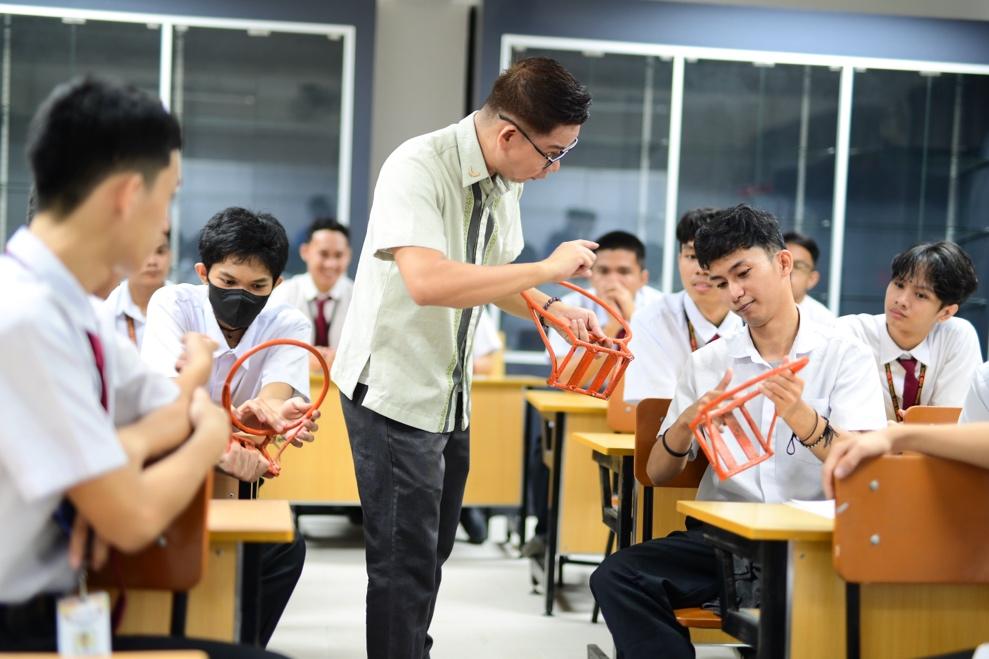
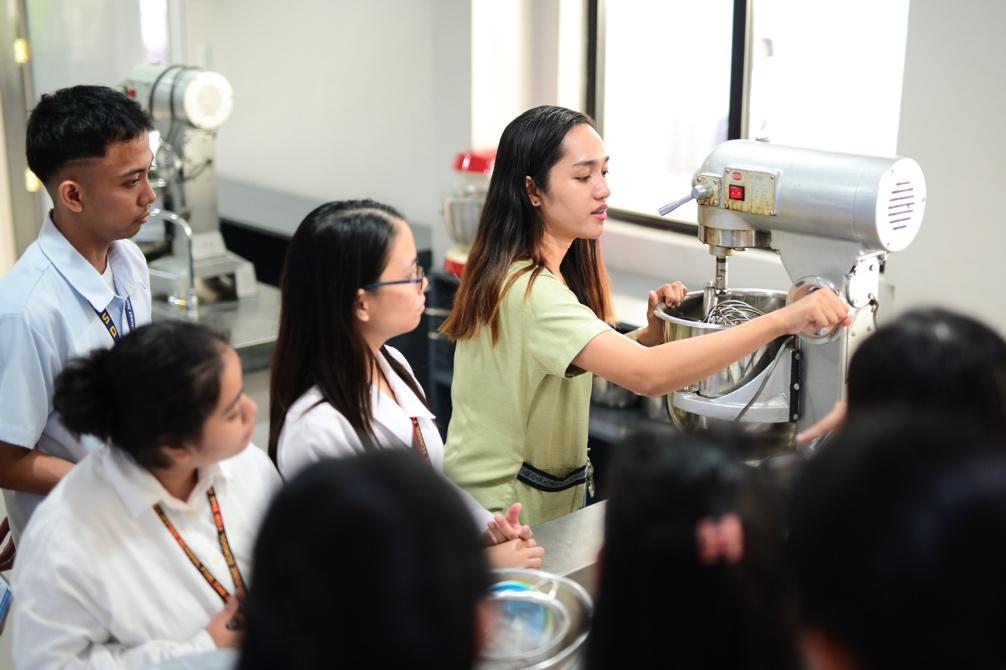
A dedicated teacher from PSD provides a hands-on lecture inside their newly rehabilitated school building.
Being hearing-impaired is a challenge in itself, navigating a world where communication relies heavily on spoken words.
In the Philippines, this challenge further creates a gap, as opportunities for the deaf are limited, particularly in education and employment. The struggle is intensified as only a few secondary learning institutions are catering to their unique needs, with affordability and facility conditions further hindering their pursuit of skills and knowledge.
A personal advocacy
Shery Funcion, the Principal of the Philippine School for the Deaf (PSD) in Pasay City, is no stranger to these challenges.
Her dedication to the cause began with her college thesis, which focused on job opportunities for deaf learners. Since then, she has immersed herself in various organizations and volunteer activities, gaining firsthand insights into the limited opportunities available to deaf learners.
She eventually became a SPED teacher before taking on the role of principal in PSD.
“The immersive experience really showed me how important these projects are for our students—kung gaano kahalaga ang pagbibigay ng mga pasilidad sa mga mag aaral lalo na sa mga bingi,” she underscored the importance of providing facilities for students with hearing impairment.
A facility that produces opportunities
The collaborative project of the Henry Sy Foundation, SM Foundation (SMFI), and the Department of Education’s Schools Division Office of Pasay City equips students with in-demand skills that will prepare them for employment upon graduation.
In the century-old PSD, their senior high school laboratory building serves as the training ground for students. Its classrooms and halls, no matter how old, have always played their role in honing and preparing deaf students to have solid career prospects after PSD.
Amidst the competing priorities within the school and the broader Philippine educational system, the facility barely had enough funds for the rehabilitation and major repairs it needed. For years, students and teachers worked around issues ranging from dim lighting and leaking roofs to uneven floors. These not only presented structural concerns but also hindered the overall learning experience of students.
“Our deaf learners need special accommodation to fulfill their special educational needs. They need to have a conducive learning environment so we can optimize the activities and learning programs,” Funcion stressed.
Funcion further shared that the 2023 collaborative project of the Henry Sy Foundation, SM Foundation (SMFI)—the social good arm of the SM Group, and the Department of Education’s Schools Division Office of Pasay City could not have come at a better time.
“The rehabilitation of the Home Economics (HE) laboratories is crucial because students need to fulfill their performance tasks. These are vital components of our senior high school program to ensure that they acquire essential skills and competencies for employment post-graduation from PSD.”
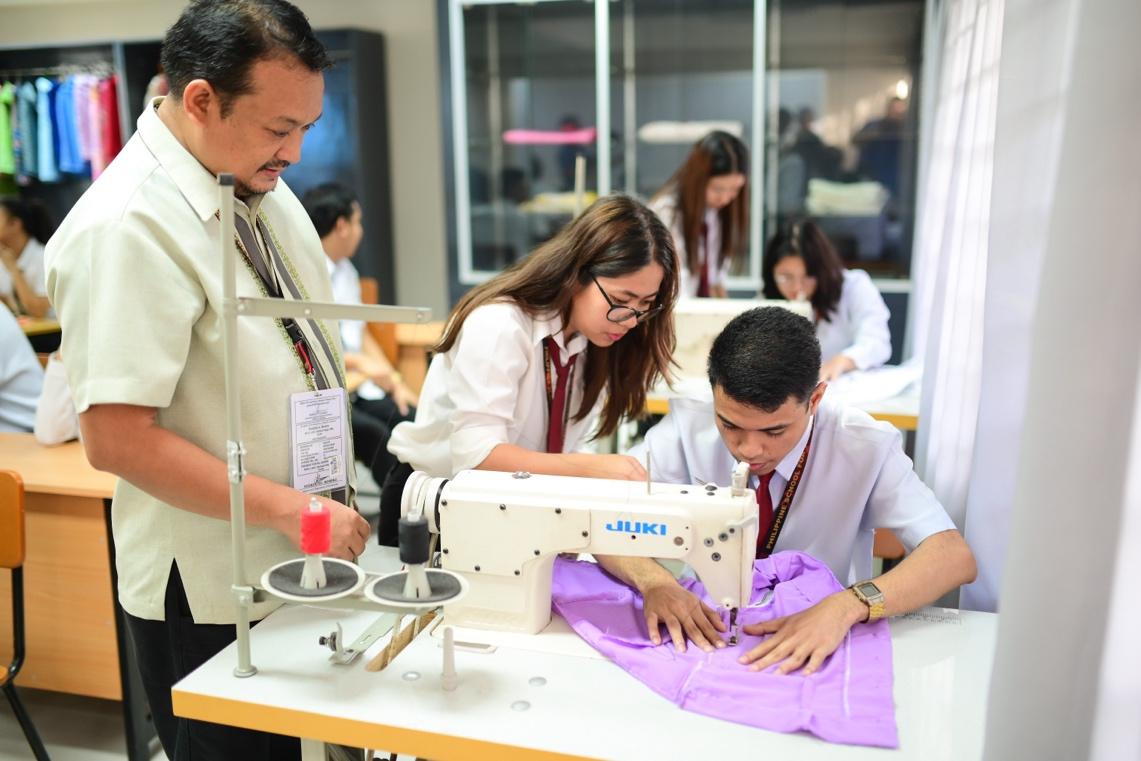
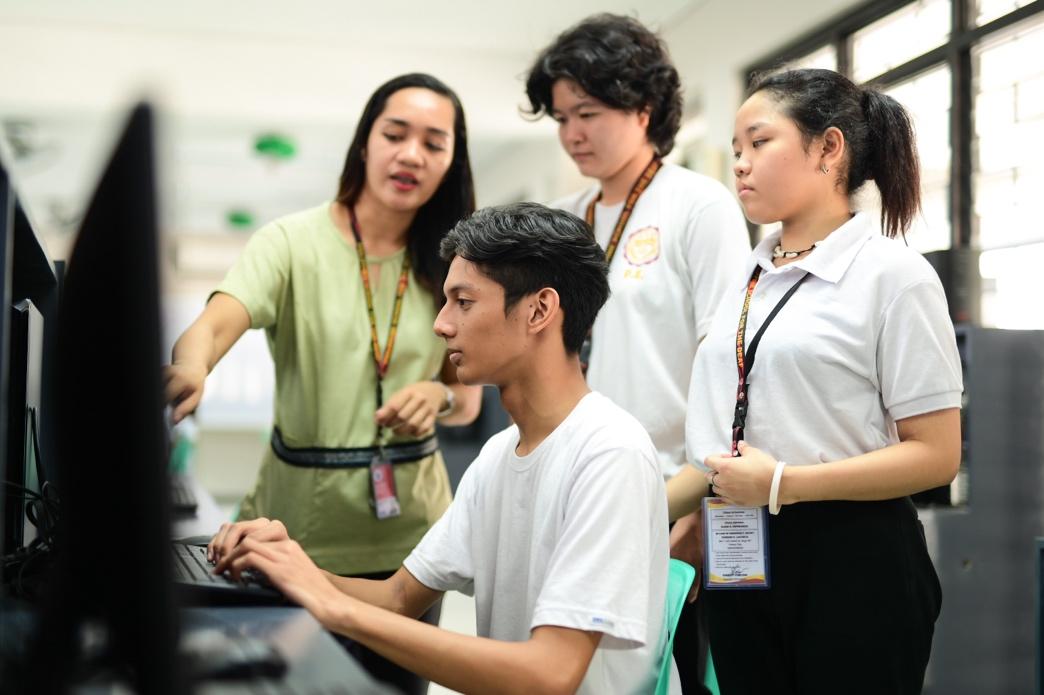
Through the collaboration, PSD has been provided with much-needed facilities in dressmaking, beauty care, cookery, electrical, bartending, food and beverage preparation, ICT, and dance.
For Funcion, their Henry Sy. Sr. building serves as a great beginning that will help pave equal opportunities and create a future where deaf students’ abilities will shine within and beyond the four walls of classrooms.
Through the collaboration, PSD has been provided with the much-needed facilities in dressmaking, beauty care, cookery, electrical, bartending, food & beverage preparation, ICT, and dance.
Philippine School for the Deaf (PSD) hand signs a gratitude message to Henry Sy Foundation (HSF), Department of Education, and Pasay Local Government after they collaborated for the revitalization of the 12-room laboratory building of Senior High School students.
The Philippines’ Magna Carta for Disabled Persons ensures the rehabilitation, self-development, and self-reliance of persons with disabilities. The country provides educational assistance to people with disabilities from primary to tertiary education, including vocational or technical training.
One such school is the Philippine School for the Deaf (PSD) in Pasay City. For over a century, the school had demonstrated the transformative power of education in empowering and unlocking the capabilities of those with diverse disabilities to live fulfilling lives.
Though standing as a testament to the Philippines’ long-standing commitment to differently-abled education, the school, one of Southeast Asia’s oldest institutions for the deaf, suffers from the effects of time and wear, compromising its ability to fulfill its mission.
The school lacked basic facilities and accessibility features: converted classrooms, timeworn corridors, limited space for vocational training, inadequate furniture, dilapidated walls and ceilings, broken tiles and faucets, and dim lighting. It was also prone to flooding due to drainage problems, and it had only one functional toilet with a broken door infested by termites.
Revitalizing a legacy
In a transformative partnership, the Henry Sy Foundation, SM Foundation (SMFI), and the Department of Education’s Schools Division Office of Pasay City joined forces to breathe new life into the Senior High School building and a four-story, 12-classroom structure. This initiative, executed under the DepEd’s adopt-a-school program, stands as a testament to the power of collaboration in revitalizing educational infrastructure for the benefit of the community.
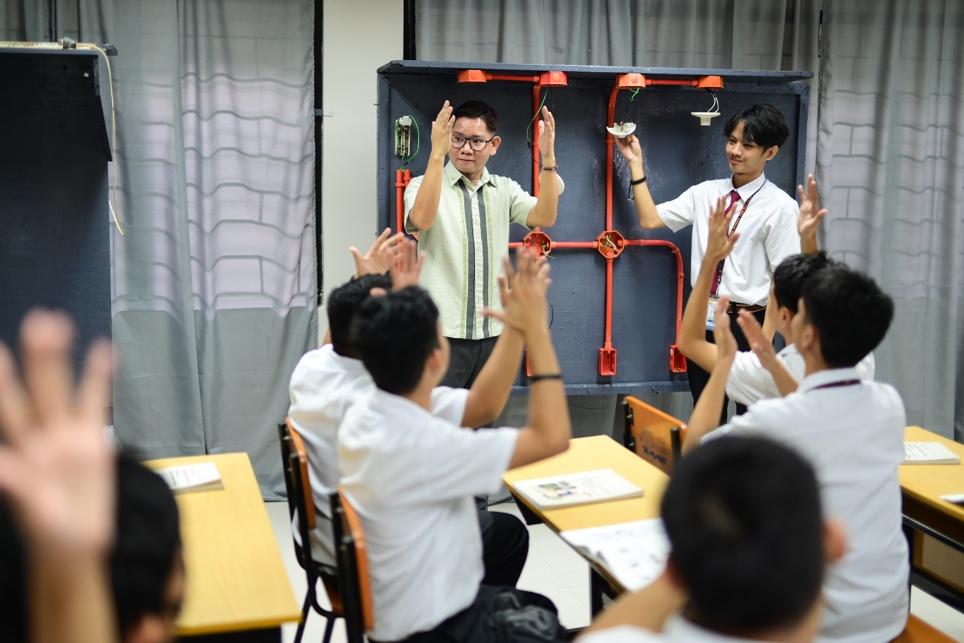
Teachers conduct lectures on electronics in a more conducive laboratory after the rehabilitation of the school building
Previously hindered by infrastructural limitations, the century-old school now features enhanced learning spaces dedicated to various subjects, including dressmaking, beauty care, cookery, electrical, bartending, food & beverage preparation, ICT, and dance. A dance studio with a dressing room and a conference room were also refurbished.
Through the social good collaboration, the laboratory for baking and cookery has been equipped with new tools and furniture, helping conduct more hands-on classes.
To enhance safety and accessibility, ramps and railings were installed throughout the campus, ensuring ease of movement for all students. Aside from revitalizing 10 classrooms, the SM group also refurbished the conference rooms, and the lobby with a reception area to provide a comfortable environment.
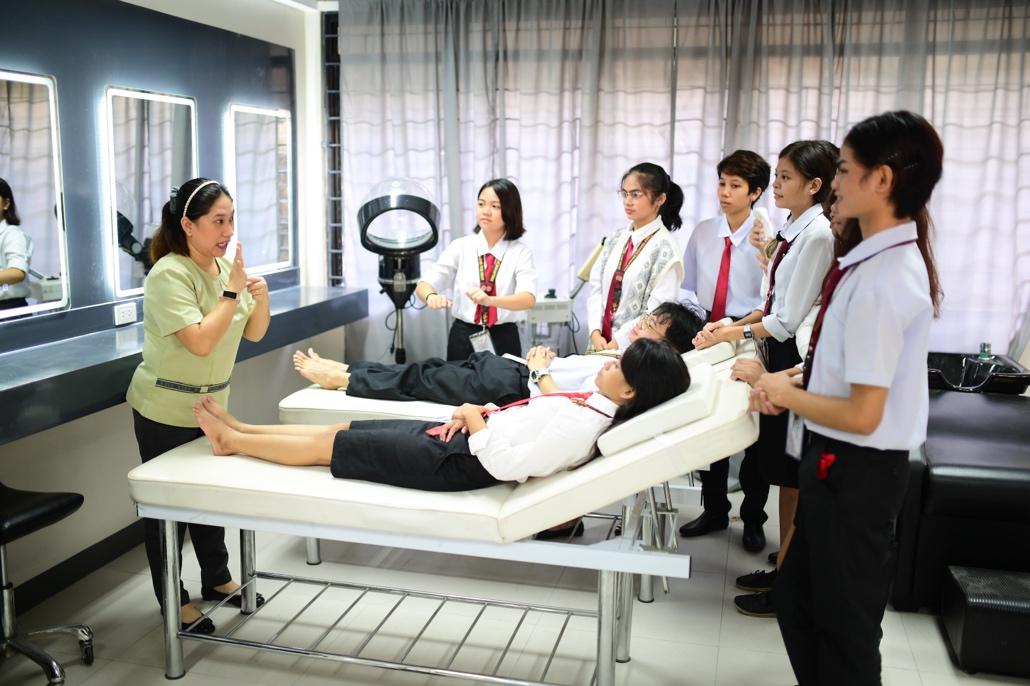
Differently abled students from PSD focus as they attend their beauty and cosmetology class in their new building.
Helping instill good hygiene and encourage healthy habits, a handwashing station, and separate male and female toilets were rehabilitated with clean, functional cubicles, urinals, and PWD-friendly facilities.
The covered court was restored with a spacious stage, creating a conducive space for outdoor learning and recreation.
The rehabilitation of the facilities at the PSD was undertaken, not just to address the physical challenges but also to cultivate an environment where every student can thrive. The project stands as a testament to the SM and Henry Sy Foundations’ continued pursuit of inclusivity and its commitment to empowering differently-abled individuals through education.
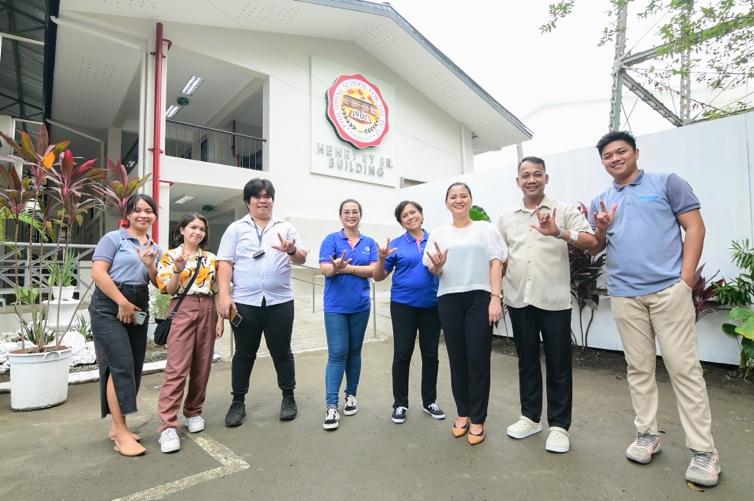
SM Foundation school building program head Juris Soliman and SMFI Project Supervisor Ar. Caren Lopez (fourth and fifth from left) with PSD Principal Shery Funcion and SDO Pasay City SGOD Sylwyn Tenorio (sixth and seventh from left) with the team behind the school’s refurbishment.
Some moments fade with time, and certain experiences leave an indelible mark, shaping our paths and identities. For Atty. Marmie Deniega and Amanda Hora, the SM scholarship application wasn’t just a gateway to education; it was the moment that shaped the life they live today.
The first to obtain a degree in the family
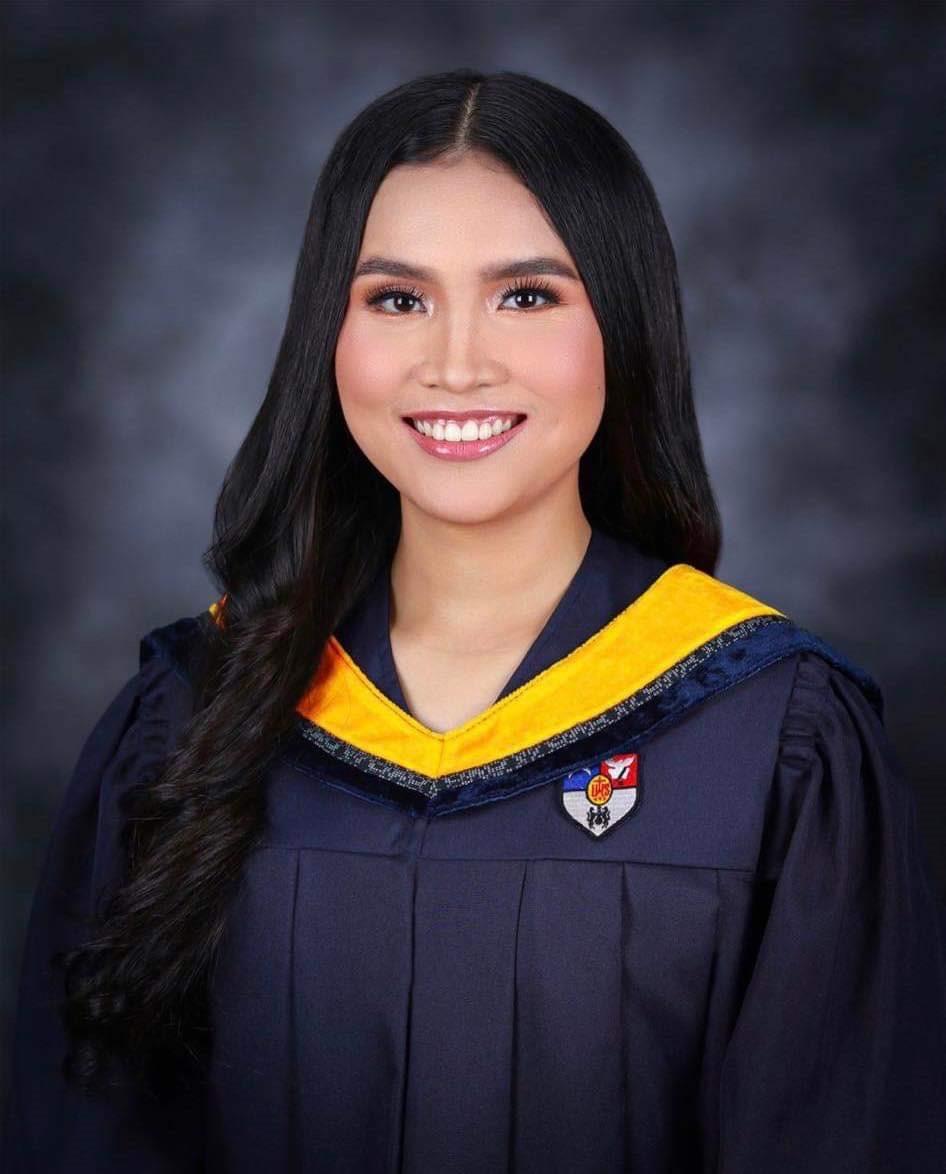
A family legacy, SM scholar Amanda Hora becomes the first in her family to earn a degree.
Amanda’s unforgettable story as an SM scholar began when she stumbled upon a Facebook post about the SM scholarship application.
“It has always been my dream to pursue a quality education without the burden of tuition expenses. I enrolled in a university in Senior High School because of a scholarship, and I know that the only way to continue my college years at the same university is to obtain another full scholarship. That is why I never hesitated to apply for the SM scholarship, hoping to be accepted,” she said.
In the quiet hours of the night several years back, an email from the SM Foundation lit up her phone’s screen, informing her that she had been selected for their scholarship program.
The acceptance was a mark that she was a few steps away from fulfilling another goal: “I pursued college because I wanted to become the first in our family to get a college degree.”
“My parents did not finish their studies due to financial difficulties, but they’ve always been supportive of my dreams and aspirations. Also, I believe in the importance of quality education. It is something that nobody can take away,” she added.
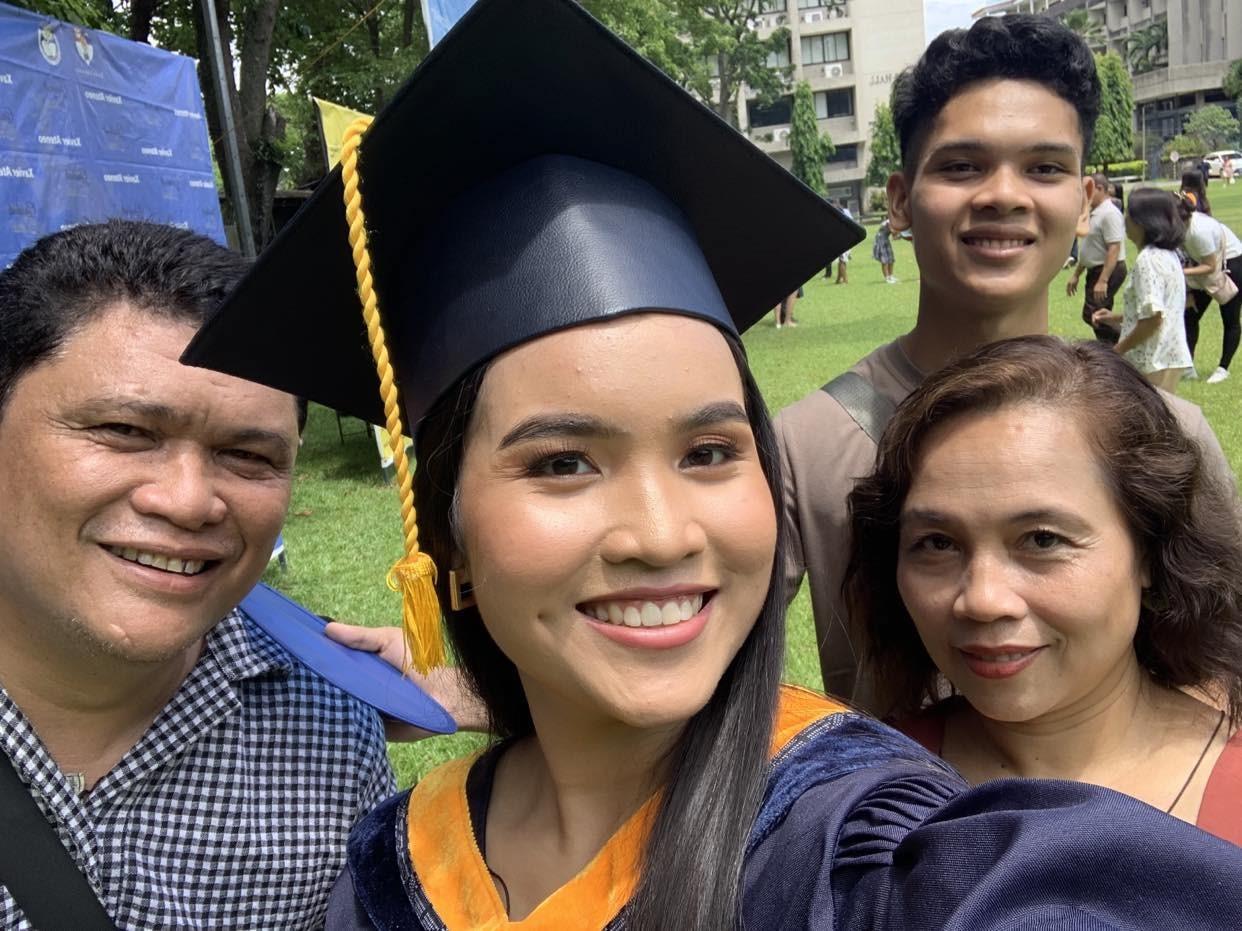
Amanda snaps a photo with her family as she graduated cum laude with a degree in BS accountancy in 2023.
The scholarship opened doors throughout her college years. Beyond the academic realm, she had the opportunities to join competitions, intern at prestigious firms, and build a network that extended far beyond the classroom.
She shared: “As a scholar, the foundation’s programs and webinars allowed me to hear inspiring stories from other scholars, mentoring and motivating us to pursue our goals. When COVID-19 affected the country and whenever there were calamities, the SM Foundation looked after us. They provided us with tools that are essential for remote learning. It made me feel that I am part of a bigger family and that I am not alone in this journey.”
These experiences paved academic and personal growth. As she graduated cum laude with a degree in BS accountancy in 2023, she aims to contribute to the community by creating a ripple effect of kindness.
“I would use my knowledge to find ways to provide livelihood programs, especially in areas or communities where it is much needed. I would also advocate for financial literacy to help people effectively manage their finances and build resilience, especially during unpredictable life events. I would also use my story to inspire the youth, especially the current and future scholars, and remind them to never give up on their dreams,” she shared.
Scholar makes an impact on the community
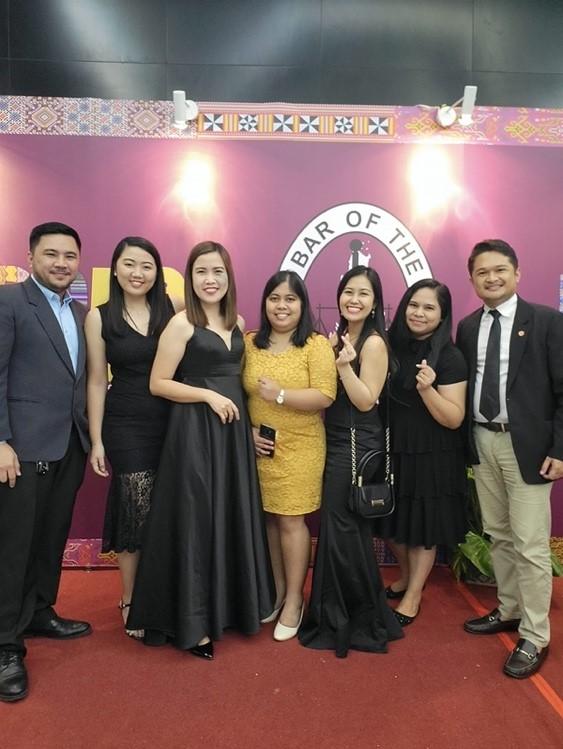
Atty. Marmie Deniega (fifth from left) with her colleagues from IBP-Cebu Chapter.
Much like Amanda is CPA-lawyer Marmie Dyan Deniega.
Raised by a single mother amid financial struggles, the pursuit of a college degree seemed like an unattainable dream until she chanced upon a TV commercial that introduced her to the SM College Scholarship.
Recalling vividly the moment, she shares: “My mother and I were watching the television. The commercial for SM Foundation came in, and the application deadline was flashed through the screen. Coincidentally, it was on that day itself, so I rushed and submitted my application at the nearest SM Mall.”
The scholarship became the cornerstone of Marmie’s academic success. She graduated with cum laude honors in Accountancy from the University of San Jose-Recoletos, crediting the scholarship for providing not only financial support but also the freedom to focus on her studies.
The scholarship not only shaped her academic journey but also fueled a sense of responsibility, which proved valuable when she pursued a law degree with the help of her aunt and part-time jobs.
Now successful in her field, Atty. Marmie travels and enjoys various leisure activities. Beyond this, she is thankful to have the capability to support her family.
Now, she proudly serves as an Attorney III at the Business Permit and Licensing Office (BPLO) of Mandaue City, actively contributing to her community’s development. She is one of the people who played a pivotal role in streamlining business permit processing in their city, making it more accessible to constituents.
As a firm believer in spreading social good, she finances the education of her siblings while actively engaging in community-based projects. She also stands as a resource speaker in schools for several crucial topics, such as the Anti-Bullying Law.
Apart from legal aid work in far-flung areas in Cebu, through the Integrated Bar of the Philippines-Cebu Chapter, she also volunteers with Law Inc., an organization helping victims of Violence Against Women and Children (VAWC). She conducts seminars across various locations in Cebu, shedding light on the intricacies of VAWC.
In the confines of her office, clients naturally turn to her for legal advice, seeking guidance on various matters: “It cannot be helped that clients will also seek legal advice from me, hence I also make it a point to help them, to the best of my ability, and within the boundaries set by law.”
Amanda and Marmie’s stories are not just individual triumphs but testaments to the impact of education. Each year, countless dreamers like them are empowered to pursue their academic aspirations and chart their paths to success through the SM College Scholarship Program.
As the application for the SM College Scholarship Program opens from Feb. 1 to March 31, 2024, countless more lives stand to be touched.



 Philippine Updates