SM scholars aspire to share the gift of education

“I desire to become an educator not just to fulfill a dream but also to be a blessing to the next generation.”

These inspiring words come from 18-year-old Princess Eunice Motel, an SM scholar currently pursuing her education at the Philippine Normal University. She is one of two children of Hildajane, an on-call factory re-packer, and Richard, a set man, hailing from Caloocan City.

Princess’ dream of becoming a teacher has been a lifelong aspiration, deeply rooted in her heart and mind since her childhood. This calling became even more pronounced when she embraced her Christian faith.

“My unwavering commitment to becoming a teacher is directly inspired by the Kidz Life Ministry, a cherished initiative of our church dedicated to teaching children about God’s word. I aspire to be a vessel for sharing knowledge, instilling hope, and nurturing a brighter future for the next generation,” she said.

To pursue her dreams, Princess has chosen to pursue a Bachelor’s degree in Secondary Education at the Philippine Normal University, her dream institution. “PNU is renowned for its ability to nurture exceptional teachers,” she remarked. “As I aspire to become an educator, I also strive for greatness and excellence, and there’s no better place to achieve that than at PNU.”

Following in her mother’s footsteps, Jhona Bolinas is pursuing a Bachelor of Science in Education with English as her major. Born in Baliuag, Bulacan, she passed entrance exams at other universities but opted to enroll at the Pamantasan ng Lungsod ng Valenzuela due to its proximity to her family.

Despite considering other career paths, Jhona opted for education, drawing inspiration from her mother, who is also an educator. “Watching, observing, and listening to her, I learned the basics,” she shared. Driven by her love for reading and writing, she also chose to specialize in English.

When asked if she plans to work abroad after graduation, Jhona keeps her options open, recognizing it as a once-in-a-lifetime opportunity. “But right now, I want to ensure that my mother enjoys a good life before making such a significant decision,” she explained.

Another aspiring educator is Krissa May Oquindo. Her father, a cable technician, is the family’s sole breadwinner while her mother dedicates her time to caring for the family. Krissa completed her senior high school education at the Universidad de Manila. She applied to four State universities and ultimately chose to enroll at the Polytechnic University of the Philippines (PUP), known for producing graduates highly sought after by employers, as per a recent survey.

SM scholar Krissa May Oquindo (right) aspires to be a teacher for her family and community.

When asked about her motivation to become a teacher, Krissa responded, “Being an educator has always been my passion. From the moment I set foot on a school campus, the idea of standing in front of students and sharing knowledge excites me.” She has selected Science as her major to deepen her understanding of the subject and to enlighten others about it.

Krissa has no plans to teach abroad. She believes that while there is demand for teachers overseas, the same holds true in the Philippines: “My passion for teaching is rooted in caring for the next generation, especially for the youth of our country.”

Through the years, the SM college scholarship program has empowered 3,791 graduates who have enrolled in over 120 partner colleges and universities across the nation. These scholars enjoy full tuition benefits, monthly allowances, part-time work opportunities during semestral and Christmas breaks, job offers from the SM Group upon graduation, and engaging activities and enrichment programs.

Additionally, SM’s tech-voc scholarship program has produced 4,669 graduates, further contributing to the development of skilled professionals in various fields.
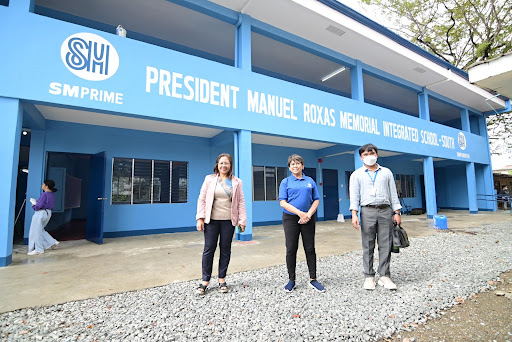
SM group turns over 104th school building

In time for the school year opening, SM Prime through SM Foundation turned over a fully furnished two-storey building to the President Manuel Roxas Memorial Integrated School-South in Roxas City, Western Visayas.

The 104th school building made through the collaboration is built in accordance with specifications set by the Department of Education (DepEd). It holds four classrooms, each furnished with desks, chairs for left-handed students, and toilets per classroom, including a special toilet for PWDs on the ground floor.

It also includes concave blackboards, electric fans, and LED lighting. Emergency lights were installed in the stairways for emergency preparedness.

Supporting DepEd’s commitment to ensure that learners have access to water for hygiene and sanitation, the SM Foundation installed a handwashing facility along with liquid soap for the community’s use.

To further assist, the SM group will help with the maintenance and upkeep of the said school.

Social Good 

SMFI School Building head, Juris Soliman (center) leads the preparation of the school building turnover. 

DepEd earlier announced that roughly 21 million students enrolled this school year 2023-2024. Amidst this, the agency reported that only over 100,000 out of the more than 300,000 school buildings are in good condition.

Believing in the power of education in uplifting communities, SM Foundation has been an active member of DepEd’s Adopt-a-School Program since 2002, turning over more than 100 school buildings to grassroots communities nationwide. The program intends to address overcrowding in schools and provide an environment conducive to learning.

Coastal land reclamation: A glimpse into today’s urban development strategies

Coastal land reclamation is increasing, will continue to grow, and will be a popular urban strategy in places that experience urban growth. 

This is according to a study, “Mapping 21st Century Global Coastal Land Reclamation,” that analyzed landsat satellite images from 2000 to 2020 to quantify the spatial extent, scale, and land use of urban coastal reclamation in 135 cities globally with populations exceeding one million. Key findings indicate that 78% of these cities have turned to reclamation to create additional land, resulting in 253,000 hectares of new land, an area equivalent to Luxembourg.

Land reclamation is the process of creating new land from seawater. It’s often used in places with scarcity of land and high population density for many purposes. From Western Europe and West Africa to the Middle East, East Asia, and Southeast Asia, these countries’ cities reclaim lands for port extension, residential/commercial, and industrial purposes aimed at creating tourist and green spaces. Key drivers like global trade and rapid urbanization are already ubiquitous, so for the next step, these cities desire prestigious place-making efforts and an enhanced international reputation. 

“Coastal land reclamation is a forward-looking approach to urban development,” says Architect Ian Fulgar, the principal architect of Fulgar Architects. It allows cities to preserve valuable ecosystems and resources from urban sprawl by expanding spaces without encroaching on existing natural land. More importantly, for architects, urban planners, and modern city dwellers, it presents an opportunity to have purpose-built urban environments specifically designed to meet their needs.

“Architects and urban planners can design sustainable and efficient infrastructure with a blank canvas, incorporating the latest technologies and best practices in urban planning. This approach can lead to more resilient and adaptive cities capable of mitigating the effects of climate change and other environmental challenges,” adds Architect Fulgar. 

Cities that lead coastal land reclamation 

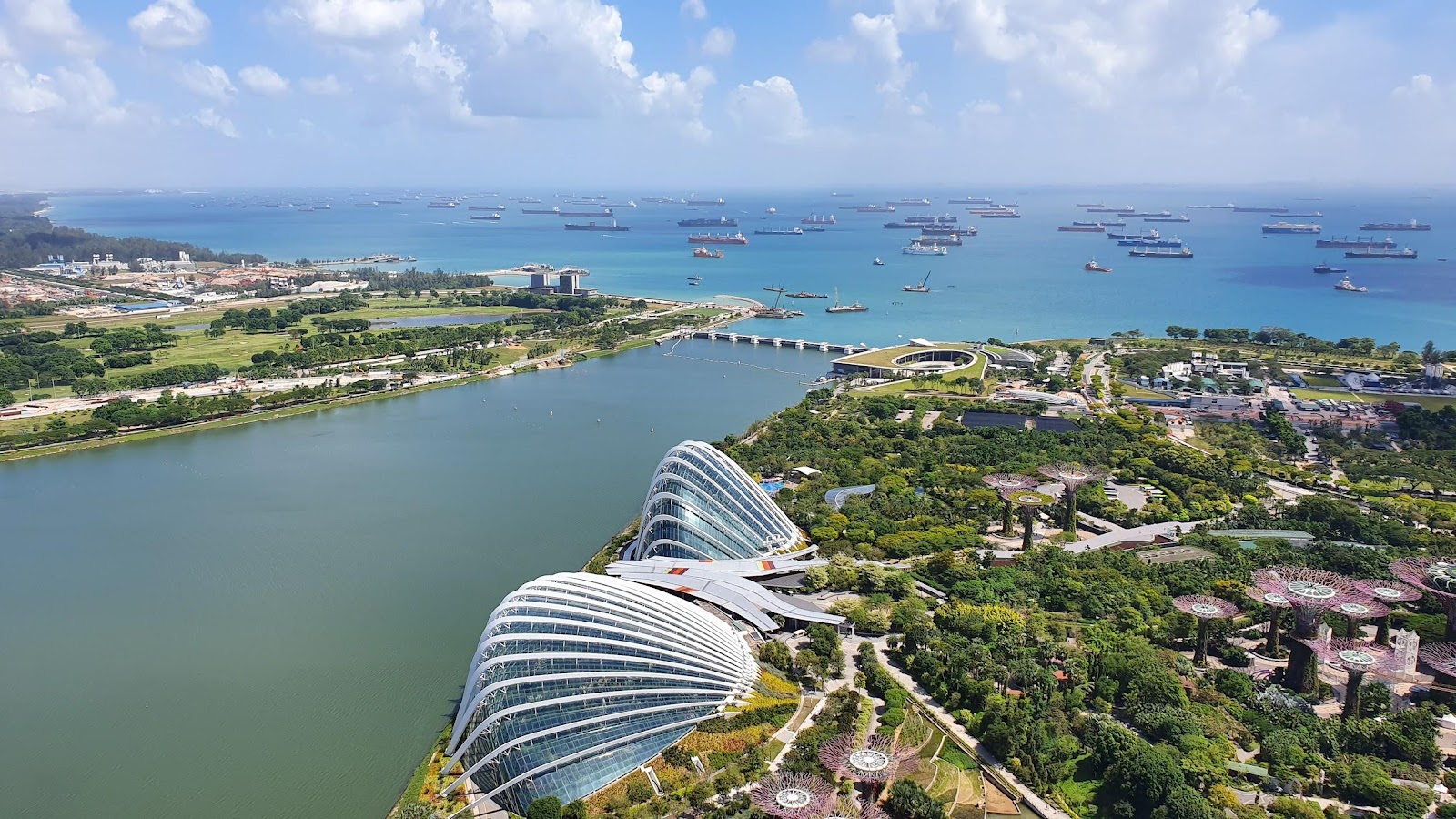
Singapore, Dubai, and Hong Kong, says Architect Fulgar, are some of the world’s most notable cities with impressive urban reclamation projects. “Not only have they transformed their respective landscapes but also captured global attention,” he says. 

Photo credit to Anastasia Yudin. An aerial shot of Flower Dome in Singapore. 

Singapore’s Marina Bay Sands and Gardens by the Bay are testaments to the city-state’s commitment to innovation and sustainability. The former is a luxury integrated resort famed for transforming Singapore’s coastline and city skyline, whereas the latter is a spectacularly unique horticultural destination that combines art, science, and nature. These reclaimed land developments further boost the country’s international reputation and real estate value around the area. 

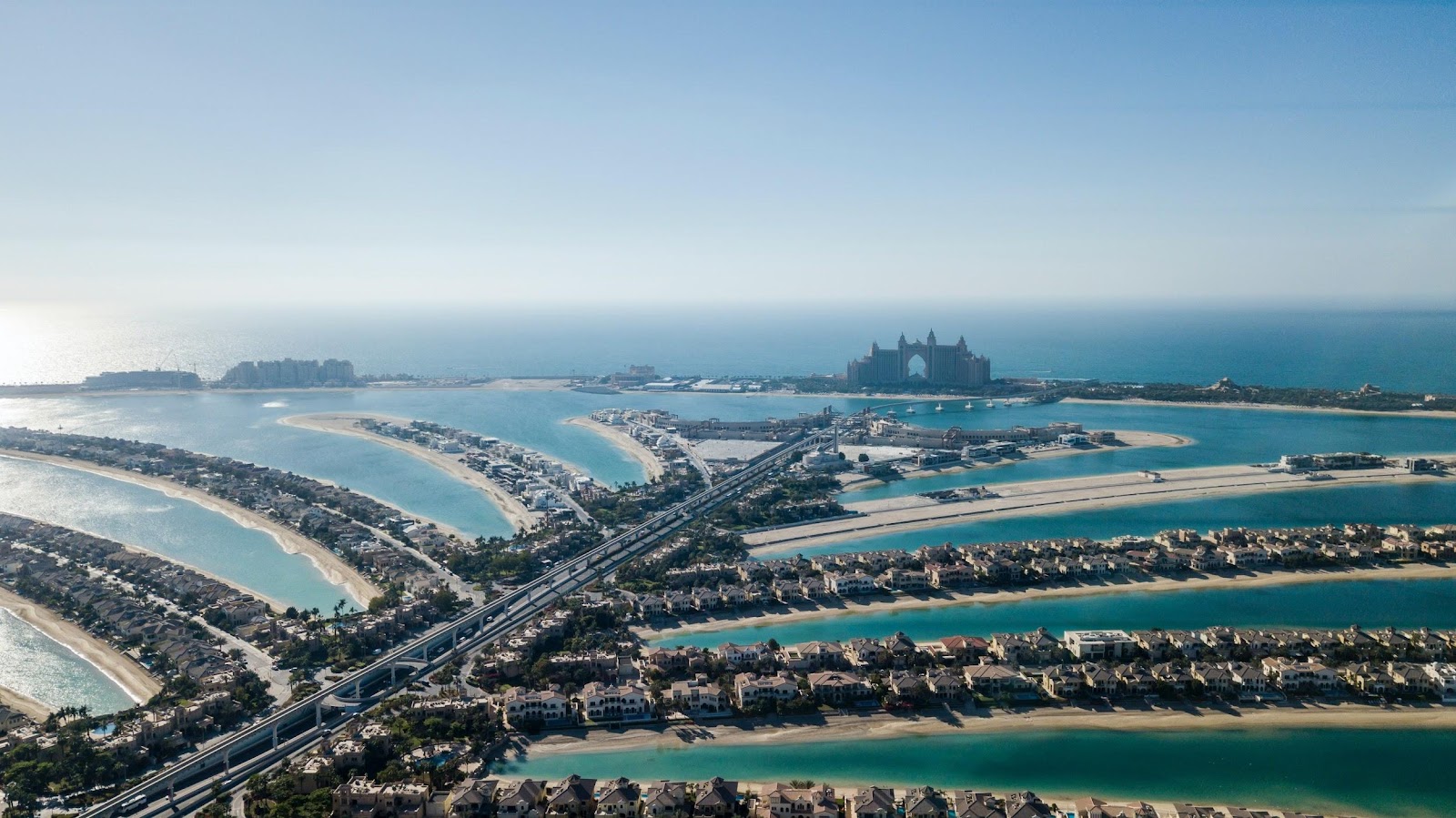
For some parts of the United Arab Emirates, coastal land reclamation has significantly changed its geography. Dubai, which has completely transformed into an ultramodern city, features ambitious projects now known as some of the most recognizable developments in the world like Palm Jumeirah and The World. “They have reshaped the coastline and established the city as a leader in innovative development, significantly elevating Dubai’s real estate value and worldwide interest,” says Architect Fulgar.

Photo credit to Abid Bin Nazar. An aerial view of Palm Jumeirah. 


Palm Jumeirah is an awe-inspiring artificial archipelago shaped like a palm tree when viewed from above. It houses some of Dubai’s luxury hotels, residences, and entertainment venues. Likewise, The World is a groundbreaking project composed of small artificial islands in the shape of a world map.

Lastly, Hong Kong’s commitment to preserved art, culture, and ongoing sustainable urban development is exemplified by its West Kowloon Cultural District. It is a 40-hectare reclaimed site along Victoria Harbour’s waterfront designated as the city’s vibrant cultural quarter where the local arts scene can interact, develop, and collaborate throughout its sustainability principles. 

Architect Fulgar, who firmly believes in creating spaces that foster belonging and unity, highlights that Singapore, Dubai, and Hong Kong share common denominators in their successful urban reclamation projects. These are innovative design and planning, focus on sustainability and commitment to cultural and societal development, and the subsequent increase in real estate value.

“These projects have created iconic and visually striking landscapes by pushing the boundaries of engineering and urban design. Sustainability is often at the forefront, integrating practices and technologies that minimize environmental impact and enhance the quality of life for residents and visitors,” says Architect Fulgar on these cities’ commitment to sustainability atop function and aesthetics.

Best practices of coastal land reclamation

Despite recognition of world-class reclamation projects, one of their primary challenges is facing criticism and potential issues over sustainability concerns. Architect Fulgar shares that the solution is through the responsibility of vital stakeholders to adopt a collaborative approach and adaptive strategies in implementing best practices, such as prioritizing sustainability and disaster resilience goals in waterfront developments. 

“The future of city development, especially in coastal areas, rests with stakeholders prioritizing sustainability and disaster resilience. By adopting a comprehensive, collaborative, and adaptable strategy, they can transform the design, construction, and management of waterfront development – ultimately creating more sustainable, resilient, and prospering urban environments that benefit both people and the environment,” adds Architect Fulgar. 

Moreover, Architect Fulgar puts emphasis on a well-planned project that begins with the developers’ thorough research and analysis of the selected area about potential environmental impacts, disaster risks, and local community needs. Architects and engineers need to incorporate sustainable design principles and green and blue spaces to reduce the development’s environmental footprint.

“Trends and insights on global reclamation illustrate the potential of reclamation projects in addressing various urban development, environmental conservation, and community well-being needs – leading to more sustainable and resilient urban planning worldwide. By adopting these lessons and focusing on sustainable growth, the Philippines can capitalize on its potential and carve a path to a brighter future.”

SM Foundation introduces rainwater harvesting for sustainable impact

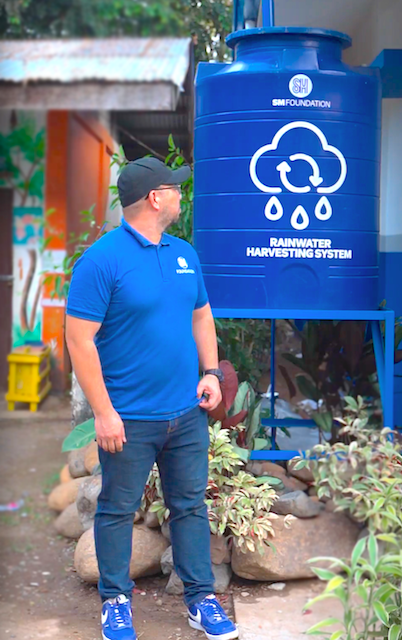
SMFI Health and Medical Programs Senior Project Manager Albert Uy inspects the water catchment to ensure it reliability.

In line with the SM Green Movement, the SM group, through the SM Foundation, recently established a rainwater harvesting system at the Brgy. Irawan Birthing Facility in Puerto Princesa City, Palawan. The initiative aims to strengthen their goal of preserving the environment and ensuring the health and wellness of future generations.

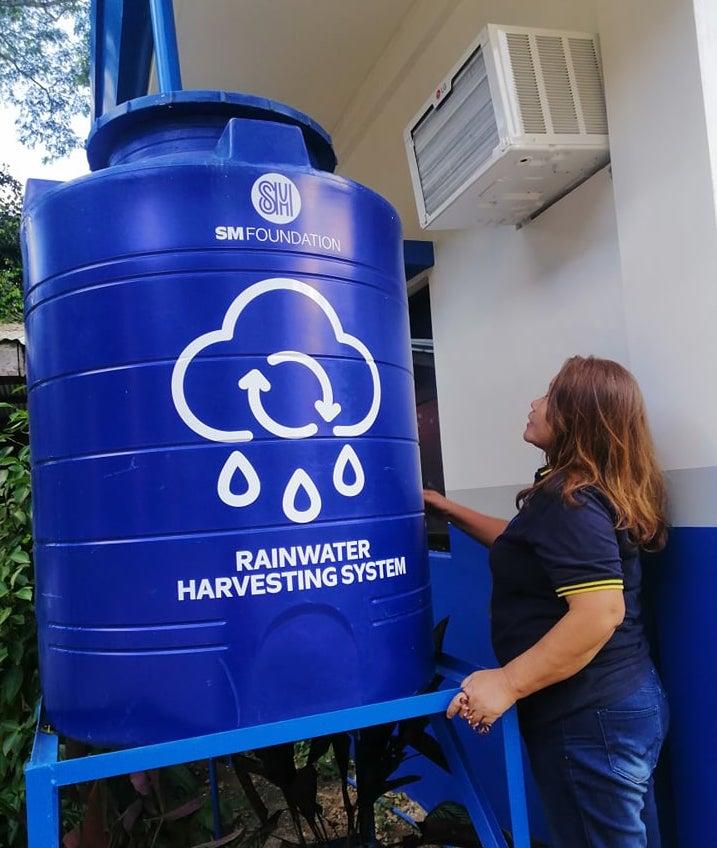
To enhance water conservation and management in the facility, the system collects rainwater from the roof and gutter, passing it through vinyl-coated mesh filters to help ensure water quality. With an 800-liter storage capacity, the harvested water serves the facility’s non-potable needs like watering plants, cleaning, and toilet flushing.

The rainwater harvesting facility also operates without electricity and features labeled faucets for intuitive recycled water use.

Midwife Narcisa Jagmis, who leads the said birthing facility, said that the facility will help them reduce their reliance on the city’s water supply systems.

“Mahalagang hindi kami nawawalan ng tubig sa center, lalo na po pag nagsimula kaming magoperate bilang birthing clinic. Ngunit minsan po, walang dumadaloy na tubig at wala kaming mapagkukunan,” Jagmis shared.  

“Kaya napaka laking tulog po ng natural na tubig mula sa rainwater catchment system na. Madali namin itong naaccess upang gamiting panglinis o pandilig dahil konektado ito sa mga gripo. Ang tubig naman mula sa main line ay maitatabi namin para sa aming sterile operations,” she said.

 Midwife Narcisa Jagmis observes as the system collects rainwater from the gutters.

SCPW, UAPSA join hands with SM Prime in promoting wetland conservation 

SCPW president Arch. Celestino Ulep leads a discussion on nature-based architecture during the fourth SCPW Wetland Center Design Symposium. (Photo from SCPW)

As the world celebrated the International Day for Biological Diversity 2023, SM Prime Holdings Inc. (SM Prime) joined the Society for the Conservation of Philippine Wetlands, Inc. (SCPW) and hosted the fourth SCPW Wetland Center Design Symposium on May 29th at the MAAX Building in the Mall of Asia Complex.

Bannering the theme “Build Back Biodiversity: Wetland Centers and Nature-Based Architecture,” the hybrid symposium featured presentations centered on fostering knowledge and awareness about wetland conservation and innovative design approaches. 

SCPW president Ar. Celestino Ulep leads the opening of the Wetland Center Design Symposium

SCPW president Ar. Celestino Ulep opened the symposium by sharing his optimism about how collaboration and embracing nature-based architecture can pave the way towards creating a future where wetlands thrive and biodiversity flourishes.

Notable experts in the field also graced the event, sharing their insights and experiences, including Chris Rostron, the global manager of Wetland Link International, and Alex Hughes of Wildfowl & Wetlands Trust in London, UK. The guest speakers kicked off the discussion by sharing about the pivotal role of Wetland Centers as a tool for Communication, Capacity Building, Education, Participation, and Awareness (CEPA) in wetland conservation efforts.

Arch. Ulep, meanwhile, engaged the audience by introducing the concept of nature-based architecture, highlighting the importance of prioritizing sustainability and harmony in design by creating structures that seamlessly integrate with the natural environment.

Meanwhile, Arch. Aaron Lecciones, SCPW Special Projects Officer, made a detailed visual presentation on the Las Piñas-Parañaque Wetland Park (LPPWP) Design Team’s experience. He highlighted the challenges and triumphs of designing a wetland park, serving as a source of inspiration for aspiring designers and architects.

Esteemed partners, including Ms. Rida Reyes Castillo of SM Prime, Dr. Arvin Diesmos of the ASEAN Centre for Biodiversity, Mr. Laudemir Salac of DENR-Region 3, and Arch. Gleo Raymundo of UAPSA graced the event to show their full support for this endeavor.

“It is an honor and privilege on the part of SM to partner with the SCPW and UAPSA in realizing their common goal of protecting ecosystems, particularly wetlands, by inspiring the youth to engage and take action on the socio-civic and economic issues in their communities by finding workable solutions towards building a sustainable future,” SM Prime AVP and Head of Marketing, PR, and Communications Rida Reyes Castillo said.

SM Prime AVP and Head of Marketing, PR, and Communications, Rida Reyes Castillo

Castillo further emphasized that environmental protection and nature conservation are integral pillars of SM Prime’s sustainability campaign and that they believe in the power of cultivating the younger generation’s devotion to building a sustainable future.

The symposium concluded with a comprehensive discussion on the rules and guidelines of the design competition, followed by an open forum and exchange of ideas among participants.

The symposium also marked the beginning of the highly anticipated 4th SCPW Wetland Center Design Competition, which aims to create a platform for talented students in the field of construction and design to showcase their skills and ingenuity and encourages them to address environmental challenges through sustainable solutions.

Secretary Loyzaga: Invest in rainwater collection

The Department of Environment and Natural Resources (DENR) and SM Prime Holdings, Inc. (SM Prime), one of the leading real estate developers in Southeast Asia, recently called on local public officials to avoid the extraction of groundwater and, instead, invest in rainwater collection for recycling and impoundment, as well as explore new technologies such as modular desalination and modular sewage treatment plants, to manage the effects of climate change on the country’s water resources.

At the recent multi-stakeholder forum, “Towards a Greener Footprint”, in Iloilo City, Environment Secretary Maria Antonia Yulo-Loyzaga shared solutions-focused guidelines to help the local government reduce its carbon footprint, with an emphasis on water conservation to address the looming water crisis and increase access to safe water and sanitation. 

“We need to invest in the appropriate engineering and infrastructure to deliver water from the source,” Secretary Loyzaga said. “We must avoid, if not drastically reduce, the extraction of groundwater, which in low-lying coastal areas causes subsidence and increases flooding.”

 “Rainwater catchments will not only provide additional supply for household use but will also help ensure the availability of surface water through the maintenance of watershed cover when impounded,” Secretary Loyzaga said.

Based on the latest report of the Philippine Statistics Authority, water abstracted for own use increased from 215.2 billion cubic meters (bcm) in 2020 to 217.8 bcm in 2021 countrywide. From 2010 to 2021, the largest amount of self-abstracted water is for the power sector (58.7%). This was followed by agriculture (33.5%); mining and quarrying, manufacturing, and construction (5.3%); and the services sector and households (2.6%). 

Earlier this month, the DENR said the country still has enough water supply, but proper management is needed to prevent a possible water crisis by the end of the year. 

The call was met with a resounding response from the private sector, particularly, SM Prime.  In the same forum, SM Supermall’s Vice President for Corporate Compliance, Engr. Liza B. Silerio shared how  SM Prime has stepped up the sustainability programs that it has been doing since SM Supermalls started recycling water in the 1990s.

From rainwater catchment to helping deter flooding in communities where its malls are located, SM Prime also pioneered the mall-based rainwater filtration system that converts the collected rainwater to be potable enough for washing, cleaning, and even drinking. Launched at SM City Baguio, the facility will supply mall tenants with enough potable water to help reduce sourcing from the communities’ water table.

“As an integrated property developer, we have seen the first-hand effects of natural hazards that are caused by the change in weather patterns in the Philippines,” Engr. Silerio explained. “El Nino and La Nina are two phenomena resulting from climate change. Our country ranks number one in the World Risk Index 2022 report as the most vulnerable among 193 nations.”

Faced with this challenge, Engr. Silerio shared that SM Prime will continue to find innovative ways to address climate challenges. “We continue to evolve and adapt technology to improve our resource consumption as part of our climate action,” she concluded.

SM Prime partners with Citicore Renewables for clean energy supply

SM Prime Holdings, Inc. (SM Prime) and Citicore Renewable Energy Company (CREC) signed a Memorandum of Agreement on 11 July 2023 as a joint commitment to champion renewable energy.

Through this partnership, SM Prime will source its energy requirements of up to 90-Megawatts (MWac) from CREC’s upcoming Lumbangan Solar Power Plant in Tuy, Batangas. The long-term agreement will commence in the first half of 2024. This is in line with the Retail Competition and Open Access (RCOA) policies of the Department of Energy.

This development further strengthens both CREC and SM Prime’s commitment to the Department of Energy’s program of moving up the renewable energy supply component of the Philippines to 35% by the year 2030.

“This partnership marks our strong commitment to providing sustainable operations in our developments nationwide. It is aligned with SM Prime’s target of achieving net zero by the year 2040. SM Prime ensures that its risk-informed investments catalyze sustainable development and positive change in the communities where it operates,” said Mr. John Ong, SM Prime Chief Finance Officer.

The agreement with SM Prime adds to CREC’s long list of blue-chip company partners, attesting to the company’s solid performance and service excellence.

“We are happy to partner with SM Prime in providing clean and safe renewable energy for their power requirements,” said Mr. Oliver Tan, CREC President. “We believe that their support and trust in us through this partnership reflects our commitment as a renewable energy provider, and we are glad that SM Prime shares in our vision of a sustainable future,” Mr. Tan added. ###

ABOUT SM PRIME:

SM Prime is one of the largest integrated property developers in Southeast Asia that offers innovative and sustainable lifestyle cities with the development of malls, residences, offices, hotels, and convention centers.

ABOUT CITICORE:

Citicore Renewable aims to lead the renewable energy revolution by empowering Filipino communities through positive energy. With a projected 5 Gigawatts of green capacity addition in the next five years, Citocore Renewable is committed to powering a First-World Philippines with Pure Renewable Energy.

A Founder’s Dream: Urban Farming and the SM Foundation

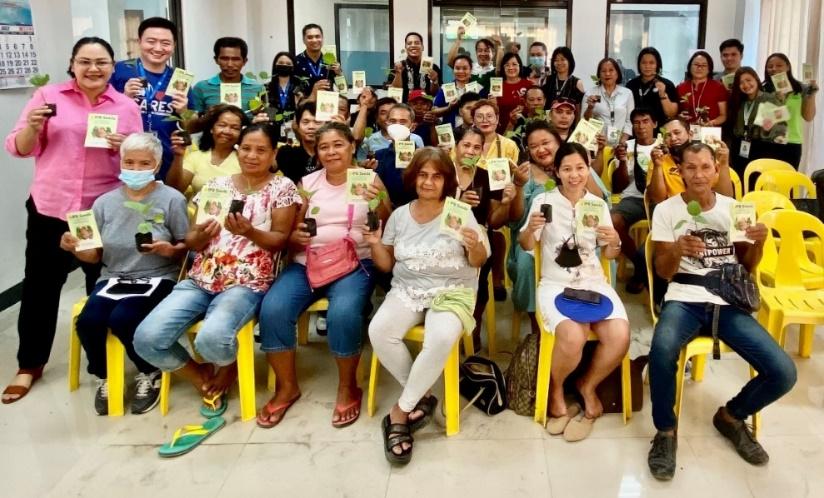
Based on a vision put forward by founder Henry Sy, Sr., and a program that began in earnest in 2007; SM Foundation mounted simultaneous Urban Farming initiatives last July 7, at the SM City North Edsa Annex and 16 other SM malls. It was a wonderful way to highlight its progress over the years and to celebrate the vision with the strategic government agencies and LGUs that have been such valuable partners over the 16 years.

SM City North Edsa

This Urban Farming initiative is led by the SM Foundation through its Kabalikat Sa Kabuhayan on Sustainable Agriculture Program (KSK-SAP). It’s about uplifting the farmer community, fostering environmental consciousness, food security, and creating livelihood and income opportunities for marginalized urban communities. Through the KSK-SAP, a comprehensive program of urban farming techniques, product development, marketing, and basic accounting is offered in strategically-located field schools.

SM City Roxas

The KSK program has successfully conducted over 260 sustainable agricultural training, benefiting a total of 28,550 farmers. These trainings have taken place in both rural and urban settings, where participants have been exposed to sustainable farming modules that promote the cultivation of nutritious, high-quality vegetables and fruits. 

SM City Clark

Partnering with the SM Foundation, SM Supermalls, and SM Markets are the following government agencies; the Department of Agriculture, the Department of Social Welfare and Development, the Department of Trade and Industry, the Technical Education and Skills Development Authority, the Department of Science and Technology, the Department of Tourism, and the Quezon City Government. Each government organization and LGU plays a vital role in maintaining the viability of the program, and so that no stone is left unturned in ensuring its success.

As an example, the SM Foundation has brought SM Supermalls and SM Markets into the picture so that as these urban farmers successfully harvest, they’re given an opportunity to market and sell their produce at the Sunday Markets that are now being held in several malls across the nation. When the produce reaches a volume that goes beyond this Sunday marketing mechanism, the SM Markets offer other alternatives.

SM City Naga

It’s about creating integration and circularity so that a mini-economic ecosystem is realized. After all, it can’t be about teaching them what and how to farm and then leaving them with no outlet with which to monetize this harvest. The SM Foundation creates these strategic partnerships so that true income opportunities become part of the overall scenario.

SM City Cabanatuan

Who would have thought that this vision of Henry Sy, Sr., back in 2007, would have been so uncanny in predicting the mounting problems and issues we face today in agriculture, sustainable food production, food security, and urban development? It’s a vision and dream that those in the SM Foundation are very proud to carry on, and deliver.

SM is in the business of creating a sustainable environment. From being the first to consider renewable energy in mall buildings, to implementing energy-saving devices, we continue to meet significant sustainability milestones. 

Join us as we commit to a more sustainable lifestyle at smgreenmovement.com and #SMGreenMovement

SM City Cebu

SM City East Ortigas

SM City Telabastagan

SM City Fairview

SM City Gen San

IS METRO MANILA NOW READY FOR NCAP?

Last August 2022, the Supreme Court issued a temporary restraining order (TRO) against the implementation of the no-contact apprehension policy (NCAP) for traffic violators in Metro Manila.

The TRO stops the implementation of NCAP-related programs and ordinances and any apprehensions through the said policy and ordinances “shall be prohibited until further orders from the Court.”

The order also halted the Land Transportation Office (LTO) and all parties acting on its behalf from giving out motorist information to all government units, cities, and municipalities enforcing NCAP programs and ordinances.

But last June 14, 2023, renewed calls to bring back NCAP were revitalized after a fatal accident happened at the EDSA Shaw Boulevard tunnel where a motorcycle driver was hit by an SUV drive. Both motorists happened to be in the EDSA Carousel Bus Lane resulting in the former getting run over by a tanker driver in the adjacent lane.

Because of this, the Metropolitan Manila Development Authority (MMDA) wasted no time in coordinating with the Office of the Solicitor General in the filing of a motion before the Supreme Court to consider lifting the temporary restraining order on the implementation of the NCAP.

It’s sad to know that a gruesome incident had to happen but aside from this, MMDA acting chairman Romando Artes said they will use the data they obtained in the past months showing an increase in the number of road accidents and traffic violations after the NCAP was suspended in August last year.

“We find it difficult to enforce the exclusivity of the said lane without the certainty of a CCTV-assisted apprehension, thereby exposing our motorcycle riders to a greater risk,” said Artes. “We keep on reminding motorists not to use the innermost lane of EDSA as it may result in an accident, but despite our repeated calls and pleas, many drivers of privately-owned vehicles and motorcycle riders disregard the policy,” Artes added.

Aside from MMDA, Metro Manila Council President and San Juan Mayor Francis Zamora is also leading the discussion to raise the TRO on NCAP.

According to Zamora, MMDA data shows from August 2022 to May of the present year has already resulted in an average of 25,926 per month as compared to a monthly average of 9,500 before NCAP was suspended.

“This data shows that we have more than a double increase in the number of violations. Having been Mayor of San Juan for the last four years, it is close to impossible to have traffic enforcers all over the city of San Juan, more so all over the entire Metro Manila. Having NCAP deters motorists from committing traffic violations” shared Zamora.

For those with an interest in road safety, NCAP represents a step forward, in terms of our enforcement of traffic laws.

In the few months it was implemented in San Juan, Quezon City, Manila, Valenzuela City, Muntinlupa City, and Paranaque City, NCAP did bring benefits that some would say were unfairly ignored in the debate.

These cities that have fully implemented NCAP cited a decrease in obstructions, choking off traffic from apprehended vehicles, reckless driving, and hazardous motorist habits.

It is unfortunate that we needed to wait for a fatal accident in order for us to see the benefits of NCAP. And aside from this incident, many agree that it is now time for the TRO to be lifted. With NCAP already addressing a lot of the public’s concerns, this July the handheld device for the Single Ticketing System (STS) will have a pilot test to be spearheaded by the Metro Manila Development Authority (MMDA).

With the STS in place, it will enable the Metro Manila local government units to strictly enforce traffic laws, at the same time, harmonize the existing national and local laws on traffic enforcement to establish an effective transport and traffic management system.

Growing Concern: 94% of Metro Manila’s Middle-Class Gen Zs and Millennials Felt the Impact of Inflation in the 2nd Quarter of 2023 – NRI Singapore-Manila Branch

Metro Manila’s middle-class Gen Zs and Millennials have expressed growing concern over the impact of inflation during the second quarter of 2023, according to a survey conducted by the Nomura Research Institute (NRI) Singapore-Manila Branch. The survey, which was conducted from May to June, revealed that a staggering 94% of respondents felt the effects of inflation during this period.

The rising costs of essential goods and services, such as food, transportation, fuel, and utilities, have forced these young adults to make cuts in their non-essential spending, including leisure and entertainment expenses. Among the respondents, 60% reported that the continuous price increases had the greatest impact on their food and beverage expenses, followed by transportation and fuel costs at 15%, and utilities, such as electricity, water, and internet bills, at 14%. Additionally, an overwhelming 83% of participants stated that they had reduced their spending on non-essential goods, while 79% found it necessary to cut back on leisure and entertainment expenses.

The survey also highlighted the financial challenges faced by this demographic. Approximately one-third of respondents (32%) reported being unable to save over the past 6 to 12 months. For those who managed to save, 44% saved a lower percentage of their income. The persistent inflationary pressures have led 38% of respondents to adjust their savings goals by either reducing the target amount or delaying their timelines. Similarly, 47% of participants had to make similar adjustments to their savings plans.

To cope with the financial strain, a significant number of respondents have turned to loans. Of the surveyed individuals, 71% reported having outstanding loans. In an attempt to augment their incomes, 43% of respondents resorted to taking out additional loans in the past year. Among those who already had loans, 58% had to cut back on other expenses to meet their loan obligations, while 19% were forced to delay payments. The survey also revealed that 41% of respondents possessed credit cards. Personal loans were the most prevalent type of loan, accounting for 30% of respondents, followed by alternative installment loans and salary loans, each representing 19% respectively.

Regarding investments, 52% of respondents had existing investment portfolios. Among these, mutual funds and stocks were the top investment products, chosen by 18% of participants each. However, due to the inflationary pressures, 12% of respondents had to partially liquidate their holdings for increased liquidity, and a minimal 1% sold off their entire investment portfolio.

Given the challenges posed by inflation, respondents have adopted a diverse array of coping strategies. A notable 94% expressed concerns that continuous price increases would persist over the next 6 to 12 months. Consequently, 91% of participants felt the need to explore additional income streams. To adjust to the current economic situation, 86% of respondents planned to continue cutting back on expenses, while 73% intended to reduce their spending on entertainment and leisure activities.

In terms of savings, 34% of participants expressed plans to increase their savings allocations to better prepare for the future, while 33% aimed to maintain their current savings pattern. However, 16% of respondents planned to reduce their monthly savings allocation due to inflationary pressures.

The survey also shed light on borrowing habits, with 46% of respondents indicating that they were less likely to take out loans, while 28% stated they were more likely to acquire additional loans.

Regarding investments, 12% expressed a desire to explore risky investments in the hopes of achieving high returns over the next 6 to 12 months. Meanwhile, 40% were considering more conservative options. Notably, 30% stated that they would choose to stay away from investing altogether, while 18% aimed to maintain liquidity.

The online survey conducted by the NRI Singapore-Manila Branch included 295 adults from Metro Manila, consisting of 92 Gen Zs and 203 Millennials from the middle class. The participants had monthly individual income ranges of PHP 13,000 to PHP 41,000 and PHP 41,001 to PHP 163,000.

As inflation continues to impact the daily lives and financial well-being of Metro Manila’s middle-class Gen Zs and Millennials, it is clear that they are actively seeking ways to navigate these challenges and secure their financial futures.